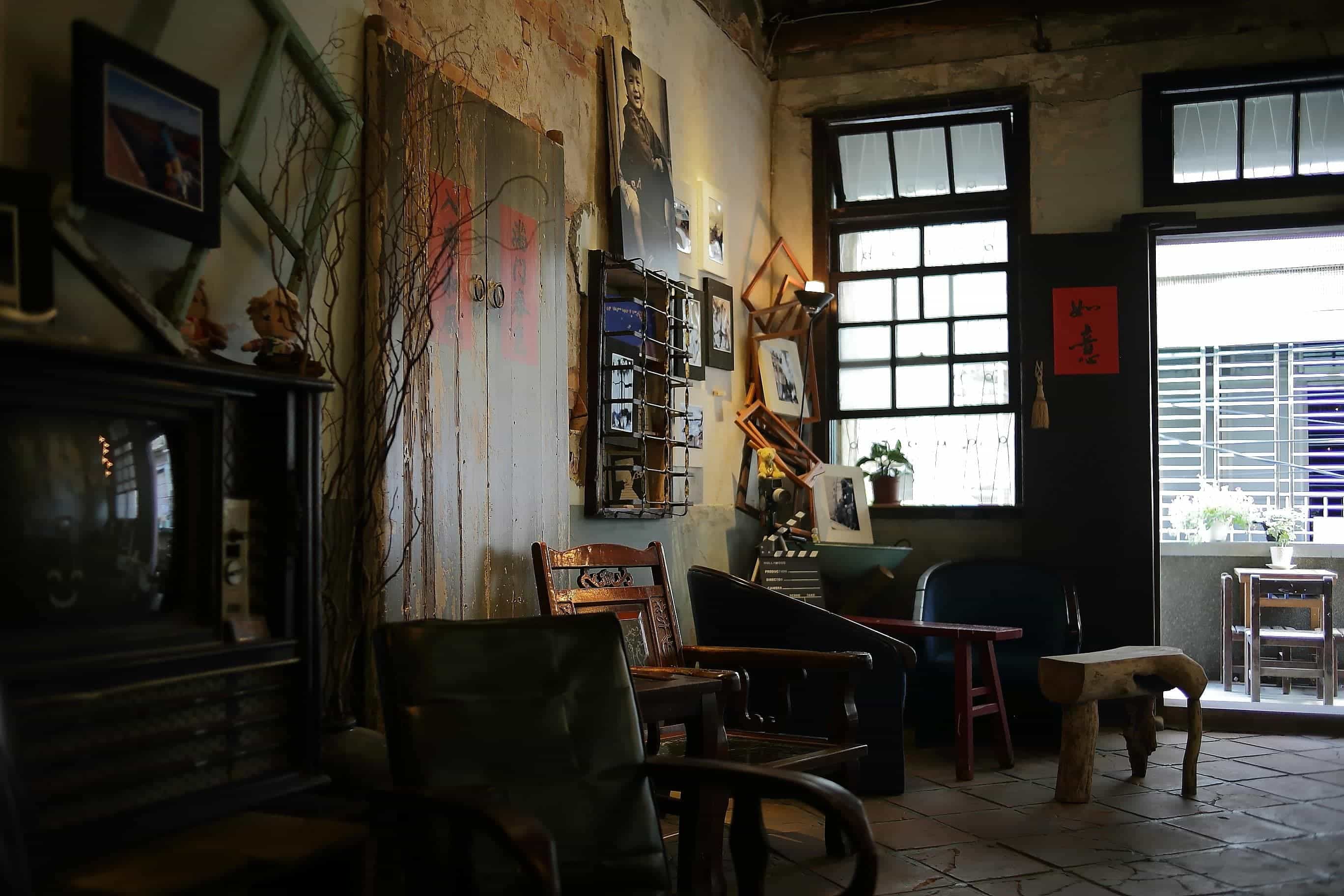
The Neighborhood as a Shared Inheritance
In many cities, people talk about old neighborhoods as if they belong mainly to memory. They are spoken of in the past tense even when they still stand in the present. Parents remember buying snacks there after school. Grandparents remember carrying water before indoor plumbing was reliable. Young adults remember being taken there on weekends for dumplings, shoes, stationery, or a haircut. Yet when these same places are described in urban policy, they are often reduced to heritage assets, redevelopment opportunities, or tourist zones. Something important disappears in that translation.
An old street is not only a preserved backdrop. It is also a social classroom where generations learn what it means to belong to a place.
Belonging is often discussed today in large and abstract terms. It is linked to identity, citizenship, migration, class, and culture, all of which matter. But belonging also has an everyday architecture. It is built from repeated local experiences: being recognized by the baker, learning which lane is safe to cross alone, noticing how older residents use public space, absorbing what counts as polite behavior in a shop, seeing how children and elders share the sidewalk, understanding who helps whom when something goes wrong.
Retro communities and nostalgic neighborhoods remain valuable because they preserve conditions in which these lessons can still be passed down informally. They do so not through lectures, but through visibility. A child sees a grandparent greeting the tailor by name. A teenager notices that the noodle seller quietly lets a struggling resident pay later. A middle-aged adult realizes that the old hardware shop contains not only tools but years of neighborhood trust. The street becomes a medium of social education.
This article explores retro neighborhood life through three generational perspectives: elders, adults in the middle years, and the young. Each generation uses the old street differently. Each experiences its losses differently as well. Taken together, those perspectives reveal why nostalgic communities are not merely sentimental relics but active spaces where local culture, mutual recognition, and social continuity are taught.
First Generation: Elders and the Street as Extension of Home
For many older residents, an old neighborhood is not a lifestyle preference. It is the operating system of life.
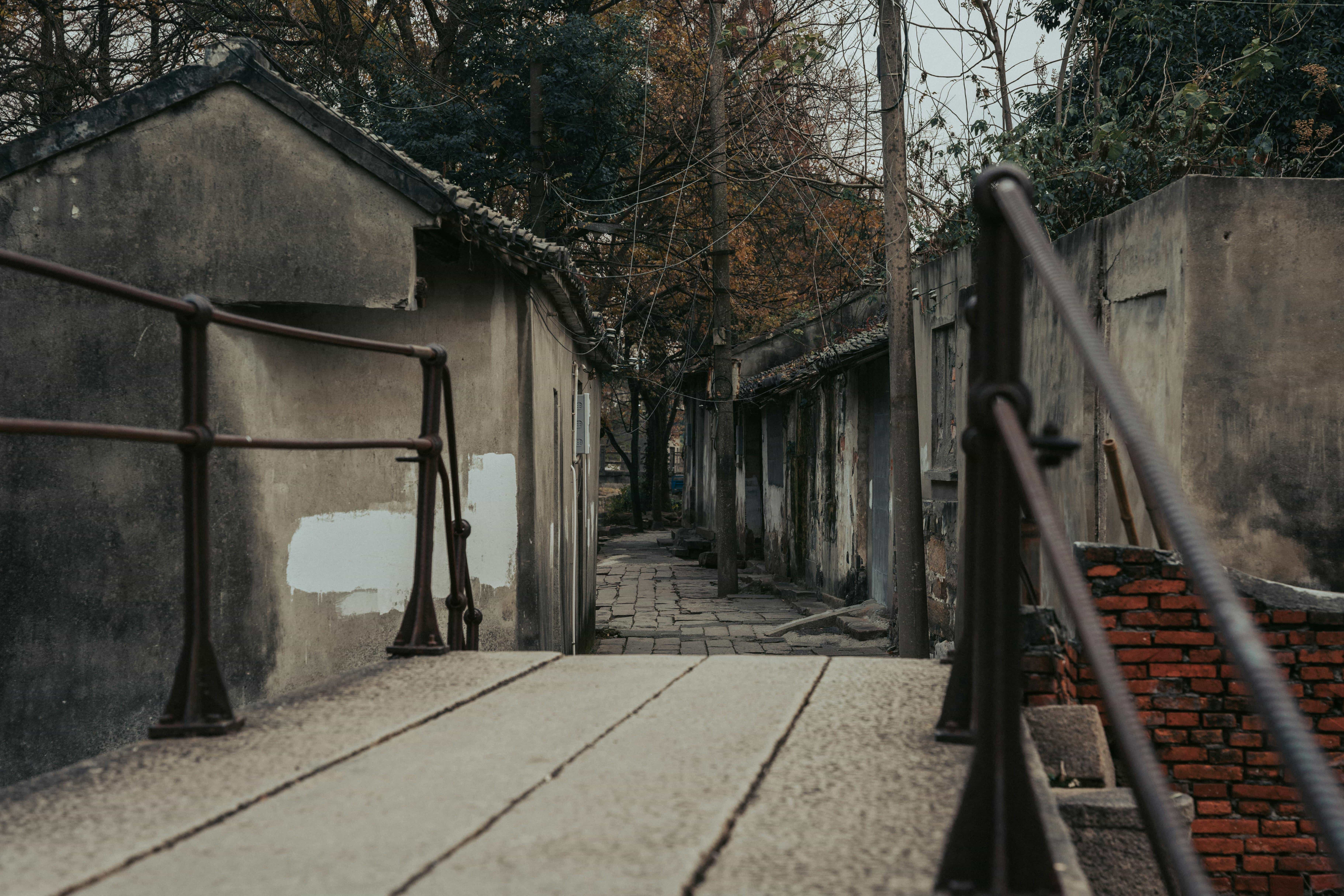
Elders often understand local streets in practical rather than aesthetic terms. The lane matters because it contains the pharmacy, the breakfast stall, the bench with afternoon shade, the neighbor who notices if someone has not appeared all day, the shopkeeper who knows which rice brand is preferred, the route with the fewest difficult steps, the public corner where one can sit without feeling displaced. In this sense, the nostalgic neighborhood is not a decorative environment. It is a support structure.
This is one reason older residents sometimes react skeptically when outsiders romanticize the places they know intimately. They are aware of the damp walls, the poor insulation, the uneven pavement, the years when the neighborhood was ignored by investment, the inconvenience of aging infrastructure. At the same time, they often defend the street fiercely when redevelopment threatens it. What they are defending is not mere familiarity. It is accumulated local competence.
An elder on an old street usually carries forms of knowledge that are invisible in official planning. They know which bakery changed owners three times but remained decent, which stairwell becomes slippery in rain, whose son moved away, where emergency medicine can be found after regular hours, which family once ran the corner laundry, and which alley still catches a cool breeze in August. This knowledge is practical, narrative, and relational at once.
For older generations, belonging is often inseparable from being known through time. Their attachment to a neighborhood is not built primarily on whether it is attractive or fashionable. It is built on years of repetition that created a map of trust. They know where help can be asked for without embarrassment. They know which public places are truly public. They know which shopkeepers can be relied on to speak plainly.
When such residents are displaced from retro communities, the loss is severe in ways standard housing calculations struggle to capture. They may move into newer, cleaner, and technically better apartments while losing the walkable web of recognition that made daily life manageable. Loneliness often grows not because a person moved far, but because they moved beyond the radius of being casually known.
Elders as Carriers of Neighborhood Memory
Old streets are also important because elders make memory visible in them.
A younger resident may see a closed storefront. An older resident sees the bicycle repairman who once worked there, the family that lived above, the festival lanterns that used to hang from the awning, and the year floodwater reached the second step. This difference matters because memory is one of the primary ways a neighborhood resists becoming generic.
When elders continue occupying public space—sitting outdoors, shopping locally, speaking with neighbors, watching children pass after school—they embody continuity. They remind the street that it has a before. Their presence keeps local history distributed rather than archived only in museums or official plaques.
This is especially important in heritage-minded communities where the most meaningful stories are often modest. The old woman who remembers when the square housed a public well. The retired teacher who can explain why one alley has its peculiar name. The man who has bought vegetables from the same family for thirty years. These stories do not usually appear in redevelopment brochures, yet they shape how residents value place.
A neighborhood loses something irreplaceable when its elders are forced indoors by hostile design, pushed out by rising costs, or treated as residual rather than central users of public space. To preserve a nostalgic district while marginalizing the people who hold its living memory is to preserve a shell.
Second Generation: Adults in Midlife and the Street as a Daily Negotiation
For adults in their thirties, forties, and fifties, the old neighborhood often means something more conflicted.
This generation tends to live between admiration and pressure. They may love the warmth, walkability, and social familiarity of retro community life while also confronting its limits more sharply than either the young or the old. They are the ones balancing school schedules, rent or mortgages, elder care, work commutes, rising expenses, convenience expectations, and changing housing standards. They must decide whether nostalgia is compatible with practical adulthood.
Many of them grew up on older streets but came of age during decades when success was associated with moving into newer developments. Better elevators, cleaner common areas, parking, more privacy, quieter interiors, stronger insulation, and a sense of social mobility all made modern housing attractive. The old neighborhood could seem cramped, backward, or economically stagnant compared with newer districts.
And yet, as many adults move through work and family life, some begin to rediscover what those older environments offered. They miss being able to solve small problems locally. They miss children encountering neighbors without formal playdates. They miss knowing which shop opens early or which lane shortens the walk home. They miss the emotional relief of seeing unplanned life happening nearby rather than organizing every social interaction in advance.
This generation often becomes the practical interpreter between memory and modernization. They are the ones asking whether an old street can remain lovable while also becoming safer, cleaner, more accessible, and less financially precarious. Their challenge is not simply preservation. It is adaptation without social erasure.
The Middle Generation and the Burden of Choice
Adults in midlife are frequently the generation forced to choose what part of neighborhood life survives.
They choose whether to keep living near aging parents or move farther away for space. They choose whether to support local shops even when chain stores or delivery apps are cheaper or faster. They choose whether to let children walk independently to the bakery or insist on controlled indoor routines. They choose whether old materials are heritage or hassle. They choose whether a family business should be continued, rented out, rebranded, or sold.
These are not purely private choices. Aggregated across many households, they determine whether a nostalgic neighborhood remains socially real or transitions into memory, branding, or upscale leisure.
The middle generation also feels gentrification in a distinct way. Elders may interpret rising commercial polish as loss. Younger people may initially see it as opportunity or aesthetic improvement. Adults juggling budgets and caregiving often see both at once. They may appreciate cleaner facades, better drainage, improved lighting, and new cafes while worrying about rent escalation, school catchment shifts, landlord speculation, and the disappearance of useful low-margin businesses. They know that a beautiful street can become unlivable if practical services vanish.
Belonging for this generation is therefore often conditional and negotiated. They want to remain attached to place, but not at any cost. They seek a version of retro neighborhood living that supports contemporary family life rather than merely honoring the past.
Parenting and the Rediscovery of Local Space
One of the strongest ways the middle generation rediscovers the value of old streets is through children.
Parents often notice that nostalgic neighborhoods offer something rare: degrees of visible, low-stakes independence. A child can walk a short distance to buy bread. Grandparents can wait outside school and stop for fruit on the way home. Teenagers can gather on the same block without requiring expensive entertainment. Local adults become familiar enough that the public realm feels somewhat supervised even when not officially controlled.
This does not mean old neighborhoods are automatically safe or ideal. They can have traffic conflicts, poor maintenance, and infrastructure problems. But where retro communities still function well, they provide a social ecology in which children learn to navigate public life gradually. They encounter shopkeepers, older residents, and mixed-age settings in ordinary ways. They see commerce, labor, care, and routine up close.
For many adults who were taught to equate successful parenting with controlled environments, this can be a revelation. The old street offers not only nostalgia, but a model of childhood less dependent on cars, screens, and prearranged consumption. It becomes a place where children can practice belonging rather than simply being transported between secure interiors.
Third Generation: Young People and the Street as Discovery
For children, teenagers, and young adults, retro communities mean something different again.
Young people often encounter old streets first as zones of sensation and possibility. The bakery smells stronger there. The stationery shop has more interesting notebooks. The old man with the caged birds knows their names. The corner snack tastes different from the packaged version. There are mysterious staircases, hand-painted signs, tiny workshops, cats on windowsills, and hidden passages that seem to promise stories. The street invites curiosity.
As they grow older, many young people also begin to value old neighborhoods as places of identity experimentation. A teenager may discover vintage clothes, film cameras, secondhand books, records, handmade jewelry, or local food traditions there. A university student may find the slower pace emotionally sustaining after the anonymity of large campuses or digital life. A young designer may study old signage. A young cook may become fascinated by neighborhood snack cultures. In this way, the nostalgic district becomes not only inherited space but creative resource.
At the same time, youth perceptions can be unstable. Some young people adore old streets while living elsewhere. Others enjoy them as leisure landscapes without recognizing the social and economic fragility underneath. Social media intensifies this tension. The old neighborhood can become an image field before it is understood as a living community.
This is why generational transmission matters. If younger people inherit only the visual language of nostalgia, they may contribute to commercialization without realizing it. If they inherit stories of use, labor, and mutual reliance as well, they are more likely to value the street as a real neighborhood rather than a mood board.
Why Young People Need Places That Feel Older Than They Are
Modern urban life often gives young people environments designed either for efficiency or consumption. Schools, transit networks, malls, campus zones, digital platforms, and branded leisure districts all organize movement and attention tightly. Old streets offer something less managed and, for that reason, more educative.
They expose the young to layered time.
In a nostalgic neighborhood, a teenager can stand outside a milk tea shop while facing a hardware store that has existed longer than their parents’ marriage. They can buy a trendy pastry in a building where an uncle remembers buying rice ration supplies. They can see old and new commerce occupying the same block without one fully canceling the other. This coexistence of eras helps young people understand that cities are made of continuities, not only launches.
Young people also need places where belonging is not entirely algorithmic. Online identity can be fluid, expressive, and liberating, but it is also unstable and often detached from locality. An old street asks different questions. Who knows you here? Which routines place you in relation to others? What does it mean to return to the same vendor every week? What obligations come with recognition? These are formative civic questions, even when they arise from buying noodles or greeting a neighbor’s dog.
A city that deprives the young of such places may still entertain them, but it teaches them less about durable social worlds.
Intergenerational Friction Is Part of the Story
It would be sentimental to pretend that old neighborhoods create harmony automatically. They do not.
Elders may resent noisy cafes or lifestyle boutiques. Young adults may feel judged by older residents. Parents may worry that local streets are too chaotic for children. Shopkeepers may complain about changing tastes. Landlords may see opportunity where tenants see threat. One generation’s beloved habit can be another’s obstacle. The folding chairs that make a street feel social to some may feel cluttered to others. The old snack stall may be treasured by grandparents and dismissed by teenagers until it becomes fashionable enough to be rediscovered.
These frictions do not disprove the value of retro communities. They prove that such neighborhoods remain socially active. A place where generations can inconvenience one another is often a place where generations are still visible to one another. Total segregation may reduce conflict, but it also reduces learning.
The goal of heritage-minded neighborhood life is not to eliminate friction. It is to maintain the shared setting in which friction can occur without total social retreat. Old streets often succeed here because they offer many small contact points rather than one forced arena of interaction.
What Happens When the Generational Chain Breaks
When a nostalgic neighborhood loses one generation, the effects spread quickly.
If elders disappear from public space, the street loses memory and informal watchfulness. If working-age adults can no longer afford to live locally or keep practical businesses running, the district loses daily function. If young people experience the neighborhood only as branded leisure rather than inhabited place, the future relationship to the street becomes shallow.
A complete intergenerational chain gives old communities their unusual density. Children carry energy. Adults carry responsibility and adaptation. Elders carry memory and continuity. Remove one group, and the street becomes less legible to the others.
This is why neighborhood preservation should not focus only on facades. Housing affordability, tenancy stability, small business protection, walkability, benches, school access, practical retail, accessible design, and tolerance for informal outdoor life all shape whether generations can remain in relation. The social future of a nostalgic district depends on whether people at different life stages can still use it naturally.
Belonging Is Learned in Public
Perhaps the deepest lesson of the old street is that belonging is not simply felt internally. It is practiced publicly.
Children learn it when they are recognized by local adults. Adults learn it again when they begin caring for both parents and children through neighborhood routines. Elders teach it by remaining present and narrating the place through memory. Shopkeepers reinforce it by converting commerce into familiarity. Even newcomers can learn it if the street remains open enough to let repetition turn into recognition.
Retro communities endure because they make this process visible. They allow people to see how everyday life links generations, and how place becomes meaningful through repeated mutual adjustment rather than private preference alone. A nostalgic neighborhood is not valuable because it freezes an idealized past. It is valuable because it lets the past, present, and future share the sidewalk.
When one old street can still do that, it is teaching the city something important. It is teaching that progress should not require the disappearance of all informal social inheritance. It is teaching that a neighborhood is not merely where housing and retail meet, but where generations learn what it means to remain accountable to a place and to one another.
That is a lesson worth preserving.
SEO Keywords and Search Intent
- intergenerational life in old neighborhoods
- why retro communities matter to families
- nostalgic neighborhoods and belonging
- old street culture across generations
- how children learn community on local streets
- elders and memory in heritage neighborhoods
- family life in walkable old districts
- generational perspective on neighborhood preservation
- retro community social value
- why old streets feel meaningful
- neighborhood belonging and local culture
- raising kids in nostalgic neighborhoods
- heritage districts and intergenerational community
- local identity in traditional streets
- preserving old neighborhoods for future generations