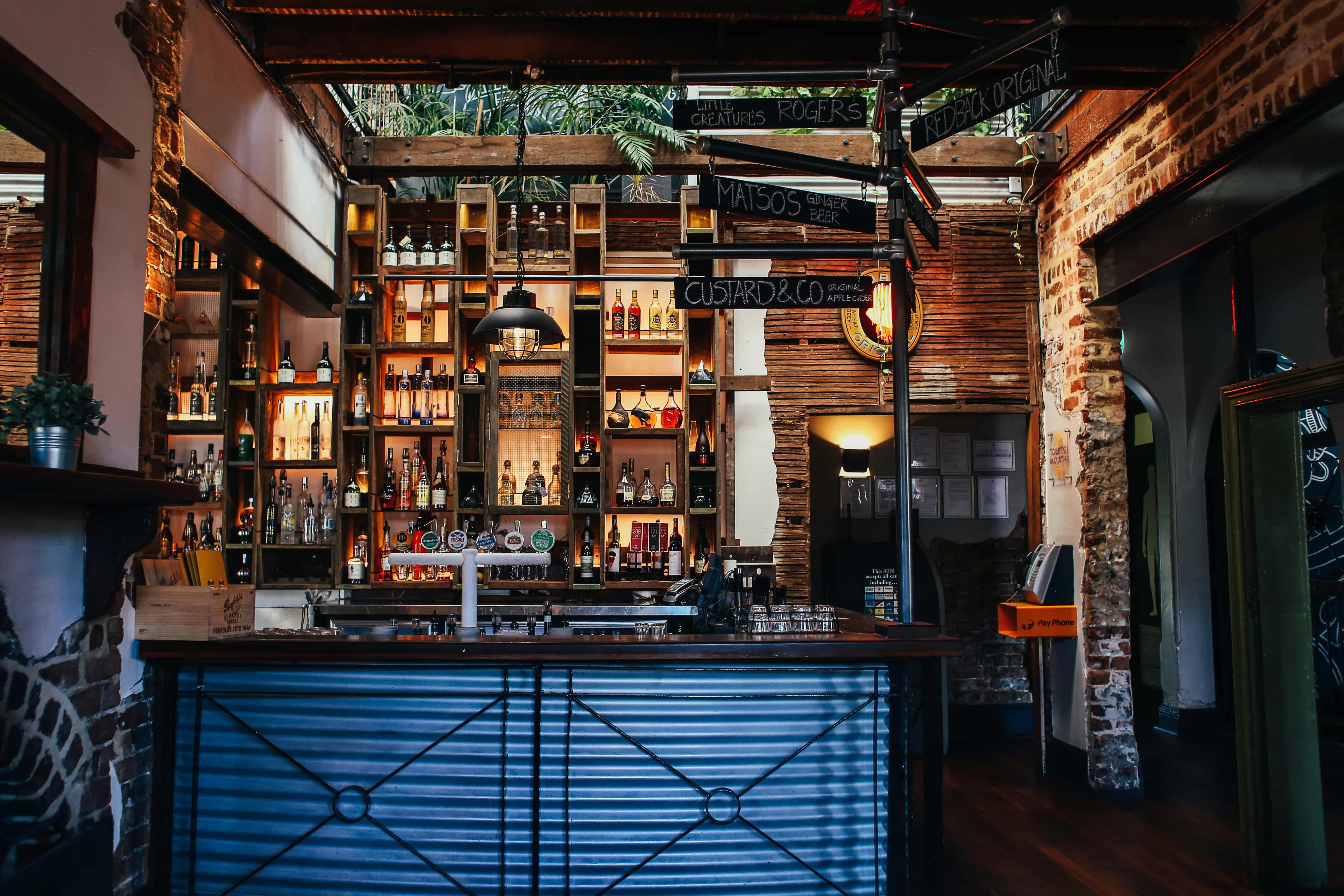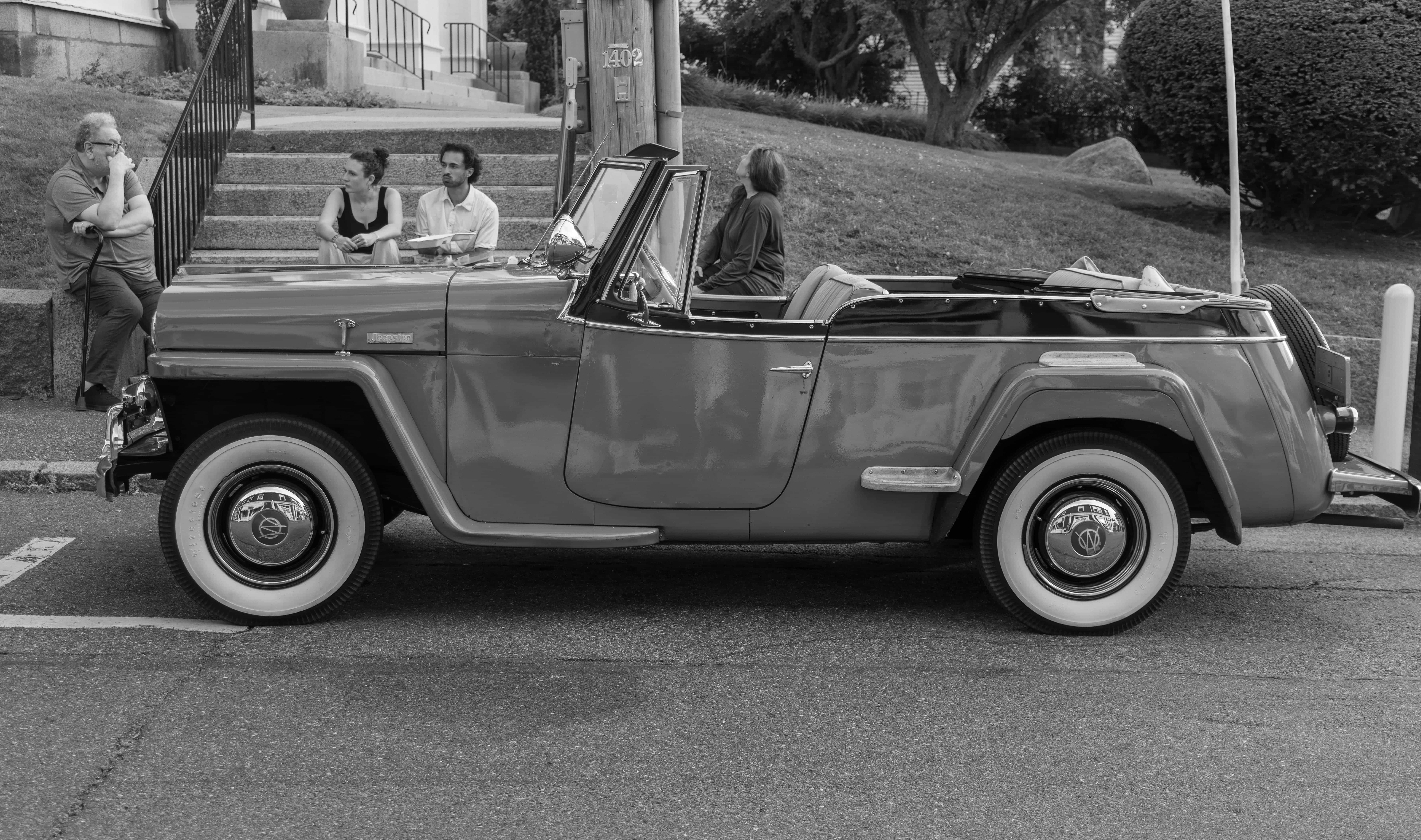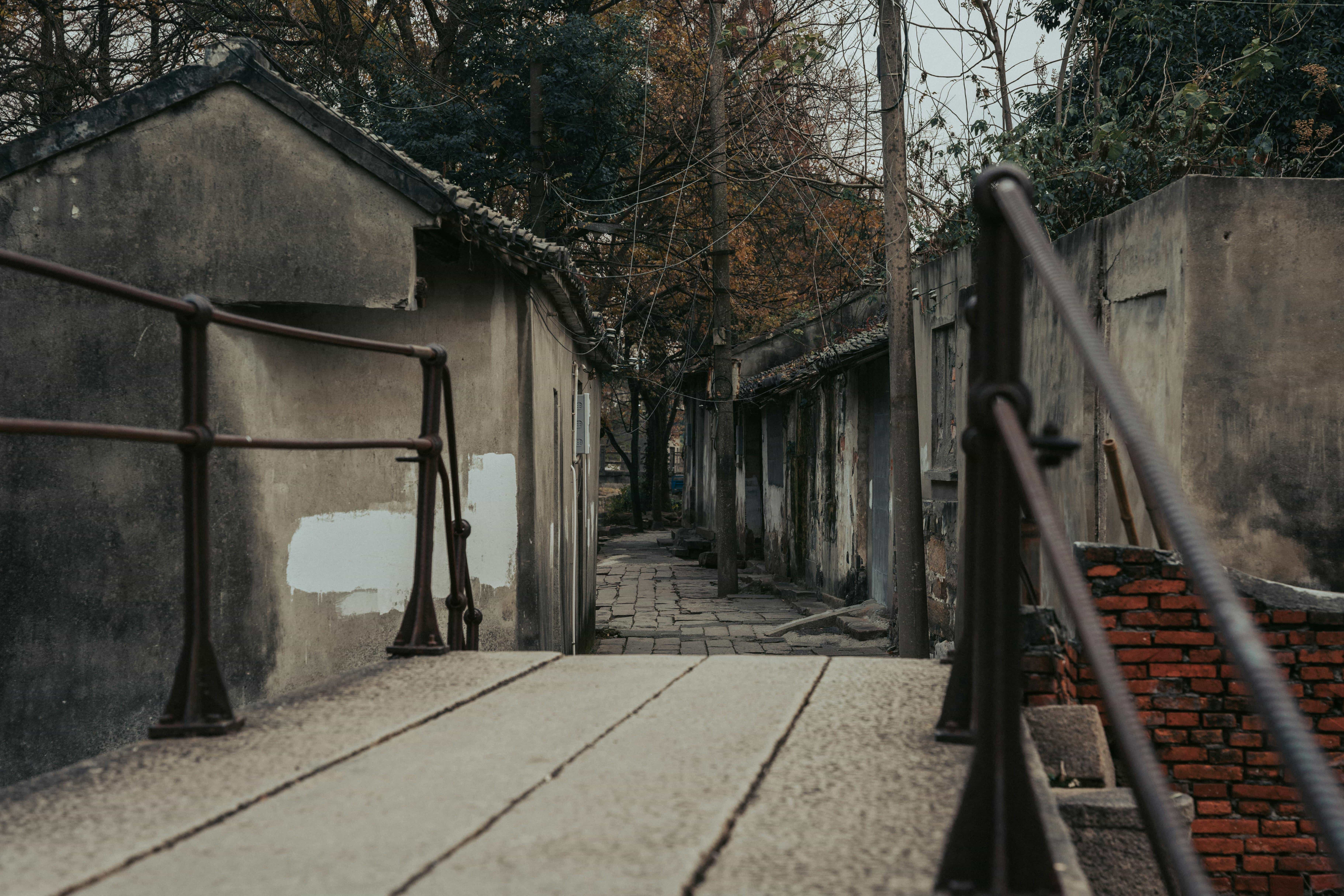
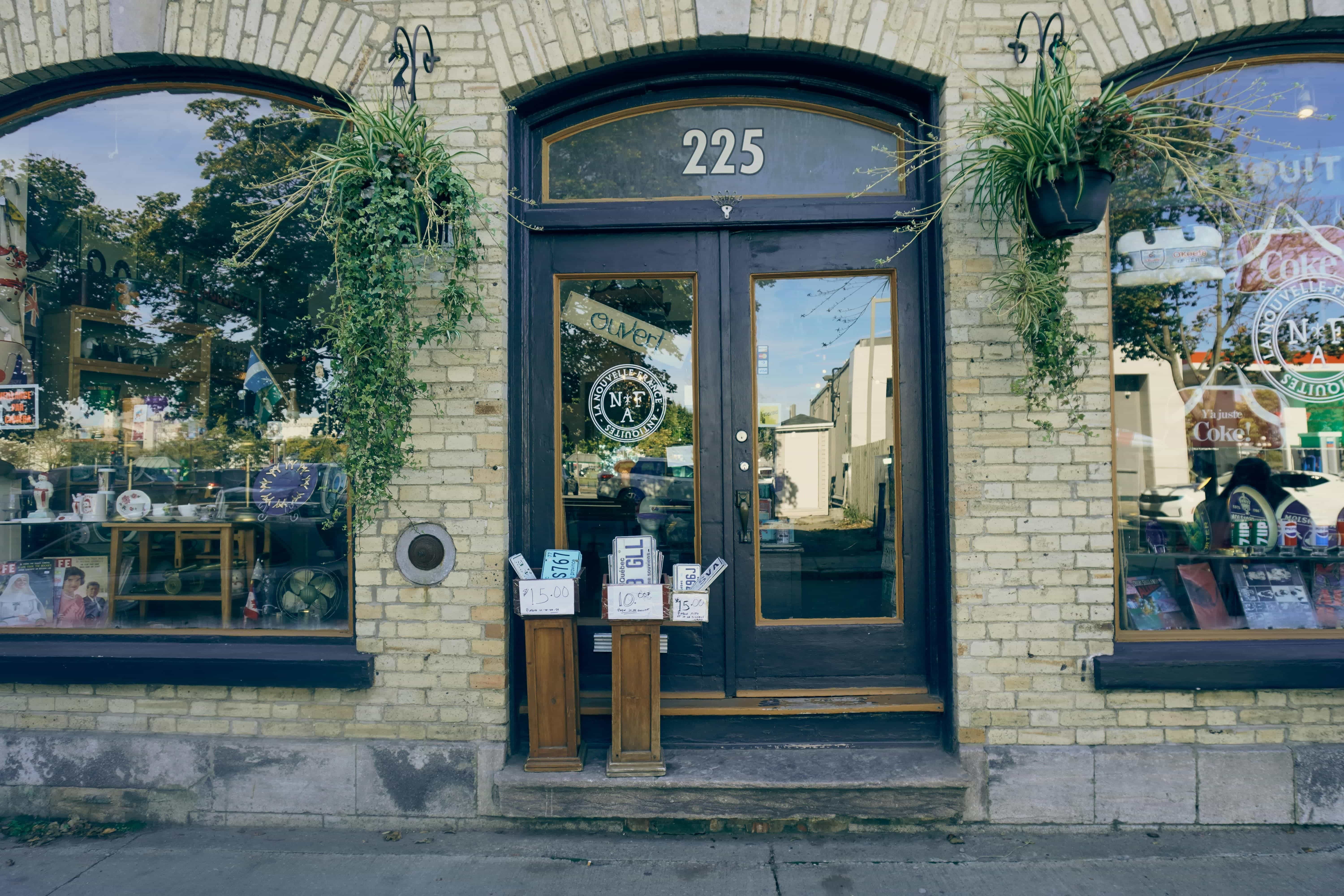
People usually describe nostalgic neighborhoods through what can be seen. They mention facades, arcades, balconies, paving stones, temple gates, market stalls, bicycles, and old trees. Yet memory is not built only from surfaces. It is built from repeated sound. The clink of bowls from a breakfast shop, the low roll of shutters opening at dawn, footsteps on uneven stone, a tailor’s machine humming behind a half-open door, distant conversation carried through a courtyard, a kettle whistle from an upper floor, sparrows under tiled eaves, a vendor calling out produce, a scooter slowing rather than accelerating through a narrow lane—these sounds create a neighborhood identity as clearly as architecture does.
In many retro communities, people feel attached to place not only because the district looks historic but because it sounds legible, social, and alive. Old neighborhoods tend to hold a denser range of small, recognizable sounds that belong to daily life rather than abstract background noise. Their soundscape is rarely silent, but it often feels more intimate than the wide-spectrum roar of newer, car-dominated urban areas.
This does not mean old districts are automatically quiet or acoustically ideal. Some are loud, overcrowded, and mechanically stressed. But the best historic neighborhoods demonstrate an important urban truth: people tolerate and even cherish certain types of sound when those sounds carry meaning, proportion, and social connection. What exhausts residents is not simply loudness. It is sonic disorder without relationship.
To understand why retro communities remain emotionally powerful, it helps to listen to them as carefully as we look at them. Their soundscape reveals how architecture, commerce, routine, and memory come together to produce a distinct kind of urban life.
What a Neighborhood Soundscape Actually Is
A soundscape is more than a collection of noises. It is the full acoustic environment as people perceive, interpret, and live through it. That includes foreground sounds, background hum, echoes, intervals of quiet, recurring signals, seasonal patterns, and the emotional meaning attached to all of them.
In a nostalgic neighborhood, sound often carries orientation. Residents know the district through acoustic cues. They can tell when the bakery has opened, when schoolchildren are passing, when the hardware shop is closing, when evening prayer or temple music begins, when rain reaches the metal awning at the corner, or when the trash cart has entered the lane. These are not random fragments. They are temporal markers that organize daily life.
Sound also carries social reassurance. In dense but walkable districts, hearing others nearby can create a sense of safety and continuity. Someone sweeping a threshold, chatting from a doorway, moving chairs outside a tea shop, or calling up to a balcony signals that the street is being inhabited and watched. The neighborhood feels socially present.
At the same time, sound can expose stress. When the layered human-scale acoustics of an old district are overwhelmed by engine noise, amplified retail sound, tourist traffic, construction, or poorly managed nightlife, residents often say the neighborhood has changed even before the facades do. What they mean is that the place no longer sounds like itself.
Why Old Streets Often Sound Different From New Developments
The built form of historic neighborhoods shapes sound in distinctive ways. Narrow lanes, uneven street widths, arcades, courtyards, recessed doorways, low-rise blocks, textured surfaces, and mixed-use frontages all alter how sound travels, reflects, softens, and lingers.
In a broad modern boulevard dominated by traffic, sound tends to flatten into a continuous mechanical field. Distance matters less because vehicle noise occupies so much of the spectrum. In contrast, an older district may break sound into smaller, more locatable pieces. You hear a bicycle bell approaching from one lane, dishes being stacked in a nearby café, a radio playing faintly in a repair shop, or footsteps entering a covered passage. The environment remains acoustically detailed.
Materials play a role as well. Timber doors, plaster walls, tiled roofs, stone paving, fabric awnings, planted courtyards, and partially open windows all produce different absorptions and reflections than glass-heavy modern façades and wide asphalt corridors. The result is often a richer texture of near sounds and a more readable transition between private and public acoustic space.
Mixed use deepens that effect. Because housing, retail, food service, worship, services, schools, and small workshops sit close together, the neighborhood produces many low-to-moderate sounds associated with necessity rather than spectacle. This is one reason people often describe old neighborhoods as lively without necessarily calling them chaotic. Activity is dispersed across many small sources instead of concentrated in a few oversized ones.
Morning: The Neighborhood Wakes by Layers, Not by Shock
One of the most beautiful acoustic qualities of a retro district is the way morning arrives gradually. In many nostalgic neighborhoods, dawn is not a sudden transition from silence to commuter assault. It is a layered beginning.
Before the shops open, there may be birds in rooflines, brooms on stone, a metal latch lifted, water poured into buckets, a delivery cart slowing at the curb, quiet conversation between neighbors, and the first kitchen sounds from street-facing homes. Then come shutters, rolling carts, chopping boards, cups and spoons, newspaper bundles, bicycles, and small greetings exchanged across thresholds.
This sequence matters because it creates a feeling of collective wakefulness. The neighborhood becomes audible through human presence, not just through machines. Residents hear one another entering the day. Sound acts like social weather: it tells people the district is alive and proceeding normally.
Contrast this with places where the main morning sound is immediate vehicular acceleration or sealed private departures from garage to highway. Those environments may be efficient, but they often lack shared acoustic ritual. Nostalgic neighborhoods preserve it because so much life still touches the street.
Midday: Productive Noise, Resting Pockets, and Acoustic Balance
By midday, old neighborhoods usually become busier, but not uniformly so. One lane may hold café chatter and dish noise. Another may feel hushed except for a ceiling fan behind a shop curtain. A market edge may pulse with bargaining while a shrine courtyard stays calm. This mosaic matters.
Human-scale sound becomes tolerable when variation exists. Residents can move between lively and quiet zones without leaving the district. A grandmother may sit in a semi-shaded side lane where voices are soft. A worker may cross to a noisier food street for lunch. Children may pass through a courtyard where sound is buffered before reaching a busier corner.
This is an underrated advantage of fine-grained urbanism. A neighborhood does not need to be uniformly quiet to be acoustically humane. It needs a distribution of sonic intensity that matches different uses, times, and temperaments.
Older districts often provide that balance better than master-planned developments because they evolved incrementally. Their small shops, inner courts, alleys, and irregular setbacks create acoustic variety. The city is not one big room. It is a series of connected chambers.
Evening: Why Familiar Sound Feels Safer Than Spectacle
Evening reveals the emotional intelligence of neighborhood sound. In the best retro districts, the shift from day to night does not mean total shutdown or entertainment overload. It means a recognizable softening. Cooking sounds rise. Conversations lengthen. Chairs scrape outside small eateries. Television leaks faintly from upper rooms. Someone waters plants. A dog collar jingles at the corner. A final repair shutter comes down. A scooter passes slowly. The district contracts but does not vanish.
These cues can make residents feel held by the neighborhood. There is still enough sound to indicate social presence, but not so much that the area becomes stressful. People know others are nearby. The street remains legible.
This is different from nightlife built around extraction—loud bars, amplified music, crowds with little relationship to local routine. That kind of sound may bring short-term economic gain, but it often erases the quieter signals through which a neighborhood recognizes itself. When residents complain that evening character has been lost, they are often describing the replacement of relational sound with commercial intensity.
Meaningful Sound Versus Unwanted Noise
A crucial insight from old neighborhoods is that not all sound should be judged by decibel level alone. People regularly accept sounds that would register as noisy on a meter if those sounds are familiar, periodic, and socially meaningful.
A vegetable vendor calling out produce, children leaving school, a mahjong table in a side room, bells from a bicycle, a tailor’s machine, dishes at breakfast time, or rain on awnings may all be somewhat loud. Yet many residents perceive them positively because they are understandable. They fit the identity of the place.
What produces fatigue is often sound without relationship or predictability. High-speed traffic, constant horns, amplified advertising, illegal late-night speakers, tourist convoy noise, heavy delivery engines, or construction with no clear schedule all impose themselves without participating in neighborhood life. They demand attention rather than share space.
This distinction has practical implications. Urban policy should not aim to sterilize historic districts into silence. It should protect meaningful local sound while reducing intrusive sonic domination. A city that eliminates every street cry, workshop hum, and market echo in pursuit of abstract quiet may also erase the acoustic heritage that makes old neighborhoods emotionally coherent.
Architecture as an Acoustic Filter
Historic buildings often mediate rather than eliminate sound. A shutter half-closed, an inner courtyard, a recessed entry, a balcony with fabric shade, a heavy timber door, a planted wall edge, or a deep window reveal can soften public sound without fully severing the connection between home and street.
This semi-porous quality is central to nostalgic neighborhood life. Residents are rarely either fully exposed or fully sealed. They live in a gradient. They can hear the street faintly while remaining indoors, or speak from a balcony without joining the sidewalk entirely. Shopkeepers can participate in the lane acoustically even when seated just inside. Children playing in a courtyard remain audible enough to be supervised from nearby rooms.
Modern sealed construction often removes these middle states. When all acoustic control depends on shutting a window and isolating the interior, the choice becomes binary: endure the outside or exclude it. Historic environments often provide subtler filters, which supports both privacy and social belonging.
Of course, these systems work best when maintained. Damaged frames, thin replacement materials, mechanical exhaust noise, and insensitive renovations can destroy acoustic comfort quickly. But where original or well-adapted elements survive, they offer a more nuanced relationship between dwelling and street.
Commerce, Craft, and the Sound of Everyday Work
One reason retro communities feel real rather than decorative is that they still sound like places where things are done. The neighborhood may contain a key cutter, cobbler, tailor, bicycle repairer, dumpling maker, tea seller, barber, flower stand, herbal shop, or metalworker. Each adds a small acoustic signature.
These are usually not overwhelming sounds. Their significance lies in rhythm and specificity. A sewing machine, the scrape of a sharpening tool, scissors on cloth, cups being stacked, a cash drawer closing, newspapers tied, dough slapped, crates unloaded, water splashed onto pavement—such sounds tell residents that labor is happening at a human scale.
In areas where traditional retail gives way entirely to branded sameness or tourist display, the sonic result is often impoverished. Music is piped in rather than produced by activity. Doors stay shut. Transactions become visually polished but acoustically thin. The neighborhood may still look historic, yet its soundscape loses texture.
That loss matters because sound is part of how people perceive authenticity. A district where everyday work can still be heard feels inhabited. One where all sound is curated for consumption can feel staged.
Sound, Memory, and Emotional Attachment
Memory attaches strongly to sound because sound is repetitive, situational, and bodily. You do not merely observe it. You live inside it. For many people, the deepest memory of an old neighborhood is not a single image but a recurring acoustic pattern: the morning tofu seller, train rumble in the distance, fan clicking overhead during summer lunch, cutlery at the noodle shop, temple bells on humid evenings, rain against corrugated roof edges, cards being played behind open windows.
These sounds help residents locate themselves in time as well as in space. A neighborhood with durable acoustic routines offers continuity. Even when buildings age and storefronts change, familiar sounds can preserve a sense of belonging.
This is especially important for older residents. Acoustic familiarity can reduce disorientation and reinforce emotional security. It also matters for children, whose memory of place forms through repetition. A child raised in a neighborhood with distinct local sounds develops a stronger sensory map than one raised in a fully sealed environment where all public sound is either traffic or distant anonymity.
For migrants returning home, neighborhood sound often produces the most immediate emotional response. Before they consciously notice renovation or decline, they notice what the street sounds like now. If the soundscape remains partially intact, belonging can return in an instant.
Threats to the Acoustic Character of Historic Districts
The sound identity of old neighborhoods is fragile. It can be destroyed without demolishing a single building.
Traffic is the most obvious threat. Even modest increases in car and motorcycle volume can overwhelm subtle local sounds. Once engine noise becomes the dominant field, the acoustic depth of the district collapses.
Tourism can do similar damage. Crowds, tour guides using loudspeakers, rolling luggage, amplified performances, party businesses, and constant photo traffic replace resident rhythms with visitor churn. The neighborhood begins to sound temporary.
Renovation can also flatten the soundscape. Replacing textured materials with reflective hard finishes, sealing courtyards, installing loud exhaust systems, using thin commercial shutters, or converting mixed-use buildings into mono-functional retail shells changes how sound behaves and what kinds of activity generate it.
Digital retail culture brings another threat: constant amplified branding. Portable speakers, promotional loops, and sound designed to capture passing attention all compete for auditory dominance. The street becomes an advertising channel instead of a social environment.
Once this happens, residents often withdraw acoustically. Windows stay shut. Doorway conversation declines. The district becomes louder but less human.
How Cities Can Protect Human Soundscapes
Protecting the soundscape of a nostalgic neighborhood does not mean preserving every sound exactly as it was. Cities change. Commerce evolves. New infrastructure arrives. But policy can still defend the conditions that allow human-scale acoustic life to survive.
Traffic calming is essential. Slower vehicle speeds and reduced through-traffic preserve acoustic detail. Support for local commerce matters too, because small shops and services produce the everyday working sounds that anchor place identity.
Cities should regulate intrusive amplification more carefully in historic districts, especially where mixed residential use continues. Tourism management should consider sound as seriously as crowd volume. Preservation standards should also address acoustic materials and building interfaces, not just visual appearance.
Public seating, trees, shaded alleys, and walkable side streets help distribute people across the neighborhood rather than concentrating everyone in one noisy corridor. This improves sonic balance. So does retaining schools, clinics, and local markets, which keep daily rhythms resident-centered.
Most importantly, planners should ask residents what sounds they value and what sounds are harming them. Acoustic heritage cannot be understood from a map alone. It requires listening to those who know which sounds mean home and which sounds mean erosion.
Why Human-Scale Sound Is a Form of Heritage
We usually think of heritage as objects and surfaces: windows, brickwork, rooflines, signs, paving. But a neighborhood’s soundscape is also inherited culture. It tells us how people use space, how businesses operate, how time is marked, how privacy and sociability are negotiated, and how ordinary life acquires emotional weight.
When old streets sound human, they remind us that cities do not have to be either silent museums or loud consumption machines. They can be places where speech, work, rest, commerce, weather, and memory are audible in balanced proportion.
That is one reason nostalgic neighborhoods remain so compelling even to first-time visitors. They sound like places where life happens close to the ground. Not everything is optimized, not everything is quiet, and not everything is preserved. But the street still carries enough small meaning for a person to feel that the city is made of neighbors rather than systems.
If we want more livable urban futures, we should protect that lesson. Look at old neighborhoods, yes. Photograph them. Measure them. Restore them. But also listen. Their greatest wisdom may be audible before it is visible.
SEO Keywords and Search Intent
- soundscape of old neighborhoods
- why historic districts sound different
- nostalgic neighborhood sounds
- acoustic character of retro communities
- human-scale urban soundscape
- how old streets create a sense of place
- neighborhood sound and memory
- preserving sound heritage in historic areas
- meaningful sound vs noise in cities
- mixed-use street soundscape
- why walkable neighborhoods sound better
- acoustic identity of traditional districts
- sounds of everyday life in old communities
- urban soundscape analysis historic neighborhood
- how architecture shapes neighborhood sound